Home Maintenance
How to Prevent Frozen Pipes in a North Jersey Winter
Where pipes freeze in NJ homes, how to insulate and seal the vulnerable runs, hose bib winterizing, when to drip faucets, thermostat minimums when away,.
By Master’s Plumbing 6 min read
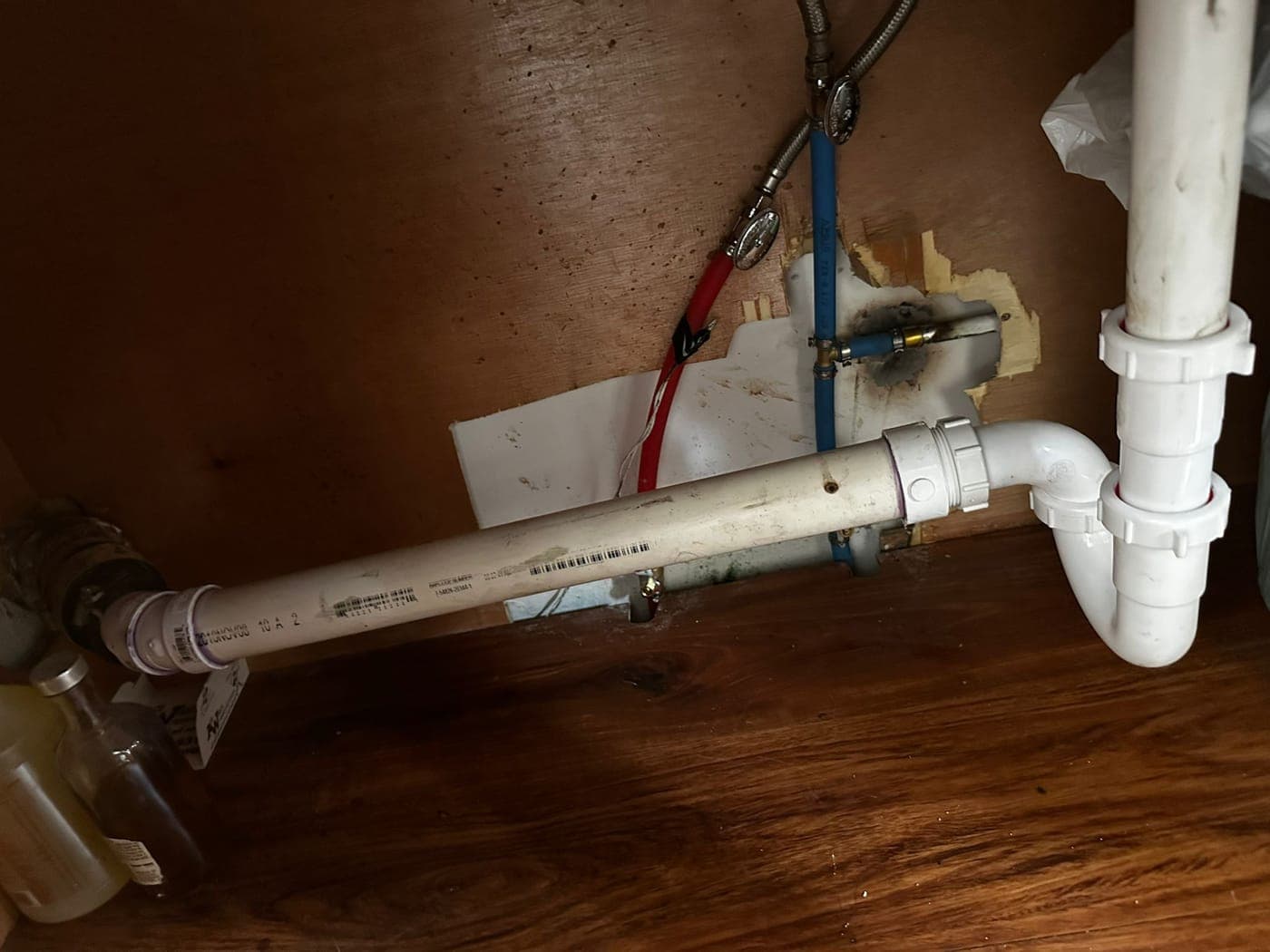
A frozen pipe is not the problem. The problem is what happens next: ice expands and splits the pipe, and when the ice lets go, water pours into the wall, the ceiling or the finished basement. Every North Jersey winter, a cold snap turns into burst-pipe calls a day or two later. Here is how to keep your house off that list.
Do the prep in fall. Once it is single digits outside with wind, the options get fewer and the plumbers get busier.
Where pipes freeze in NJ homes
The pipes at risk are the ones exposed to cold air, not the ones deep inside the house.
- Crawlspaces and unheated basements, especially in ranches and split-levels with foundation vents left open.
- Garages with a water line running through them to a hose bib, a laundry, or a bathroom above.
- Exterior walls: the kitchen sink on an outside wall, a bathroom added over a porch or garage, or a pipe run behind a poorly insulated wall in a pre-war house with balloon framing.
- Hose bibs that are not frost-free, and frost-free ones left with a hose attached.
- Attics and knee walls where a pipe was run to a second-floor bathroom.
- Additions, enclosed porches and three-season rooms built over an unheated space, common on 1950s capes and colonials that got a sink or a heating loop later.
- Baseboard heating loops on exterior walls in rooms where the thermostat is set low or the zone is off.
Insulate the vulnerable runs
Foam pipe sleeves from any hardware store, cut to length and taped at the seams, make a real difference on runs in crawlspaces, garages and basements. Insulate the cold lines as well as the hot; cold lines freeze first. For a line that has frozen before, self-regulating heat cable under the insulation, plugged into a GFCI outlet, keeps it above freezing on the worst nights. Follow the manufacturer's instructions and never overlap heat cable on itself.
Seal the air leaks. A pipe with a cold draft blowing on it from a gap in the rim joist, a dryer vent or an open crawlspace vent freezes long before a pipe in still air. Close crawlspace vents in winter, foam or caulk around pipe penetrations through the foundation, and stuff insulation into the rim joist bays where pipes run.
In a kitchen with the sink on an exterior wall, open the cabinet doors on cold nights so room air reaches the pipes.
Deal with the hose bibs
- Disconnect every garden hose in the fall. A frost-free faucet with a hose attached cannot drain, and it will freeze and split inside the wall where you will not see it until spring.
- If the bib has an interior shutoff, a valve on the pipe just inside the basement wall, close it, then open the outside faucet to drain the line, and open the small drain cap on the interior valve if it has one.
- Put an insulated cover on any faucet that cannot be isolated.
- If you have an old standard bib with no interior shutoff, ask us about replacing it with a frost-free sillcock. It is a quick job.
Let faucets drip in a cold snap
When the forecast calls for single digits, or a windy night in the teens, open the cold tap slightly on the faucet farthest from where the water enters the house, and on any faucet fed by a run through a cold area. A steady drip is enough. Moving water is much harder to freeze, and an open faucet relieves pressure, so even if ice forms the pipe is less likely to split.
Run both hot and cold if the hot line is on an exterior wall too. Yes, it wastes a little water. It is cheaper than drywall.
Thermostat settings when you are away
Do not turn the heat off, and do not set it very low, when you leave for a winter trip. Keep the thermostat in the mid-50s at the lowest, and remember that the temperature inside an exterior wall or an unheated corner is much colder than the room. Leave interior doors and sink cabinets open. Have someone check the house. If you will be gone for weeks, the safer move is to shut the main valve and drain the system, which we can do for you.
A thermostat that alerts your phone when the house temperature drops is worth having for exactly this reason. A furnace or boiler failure while you are away is how whole-house freezes happen.
If a pipe does freeze
The signs: one faucet gives nothing or a trickle when others work, a toilet on one line will not refill, or there is frost on an exposed pipe.
- Shut the main water valve first. If the pipe has already split, this stops the flood when it thaws.
- Open the faucet on the frozen line so melting water and pressure have somewhere to go.
- Find the frozen section, usually where the pipe passes through the coldest area.
- Warm it gently with a hair dryer, a heat gun on low, warm wet towels, or a space heater in the room. Start at the faucet end and work toward the frozen spot so the melt can escape.
- Never use a torch, an open flame, or anything that can scorch the pipe or the framing.
- Once water flows, check the whole run for leaks before you walk away, and leave the faucet trickling until temperatures rise.
If you cannot reach the pipe because it is in a wall or ceiling, turn up the heat in the house, open the nearest cabinet or access panel, and call us. Thawing inside a wall without opening it is slow, and a burst you cannot see is the worst kind.
If a frozen pipe bursts
Main valve off. Power off to any wet area. Open faucets to drain. Move belongings. Photograph everything. Then call Master's Plumbing at 862-666-2155. We thaw, repair the split section in copper or PEX, and check the rest of the run, because a pipe that froze in one place usually froze in others, and the second split is often a foot from the first.
Longer-term fixes
If you have a run that freezes every year, insulation and heat cable are the bandage. The cure is rerouting the pipe through heated space, moving a sink line off the exterior wall, or repiping a bad run in PEX, which tolerates a freeze far better than copper. We do this work all year, and fall is the right time to schedule it.
When to call Master's Plumbing
Call 862-666-2155 for a burst pipe or a frozen pipe you cannot reach, any hour. Call ahead of winter to have hose bibs, crawlspace lines and exterior-wall runs insulated, rerouted or replaced, and to have your main shutoff valve checked so it works when you need it.
Related services
- Emergency PlumbingBurst pipe, sewer backup, no hot water? Master's Plumbing answers 24/7 across North Jersey with licensed emergLearn more
- RepipingLow pressure, rusty water, repeat leaks? Master's Plumbing repipes North Jersey homes in PEX or copper, whole Learn more
- MaintenanceAnnual plumbing inspections, water heater flushes and pre-purchase checks across North Jersey.Learn more
- InsulationLosing heat through the attic or rim joists? Master's Plumbing offers attic and basement insulation alongside Learn more