Heating
Furnace Stopped Working? Check These 6 Things Before You Call
Thermostat, switch and breaker, filter, condensate on high-efficiency units, ignitor and flame sensor symptoms, gas supply.
By Master’s Plumbing 6 min read
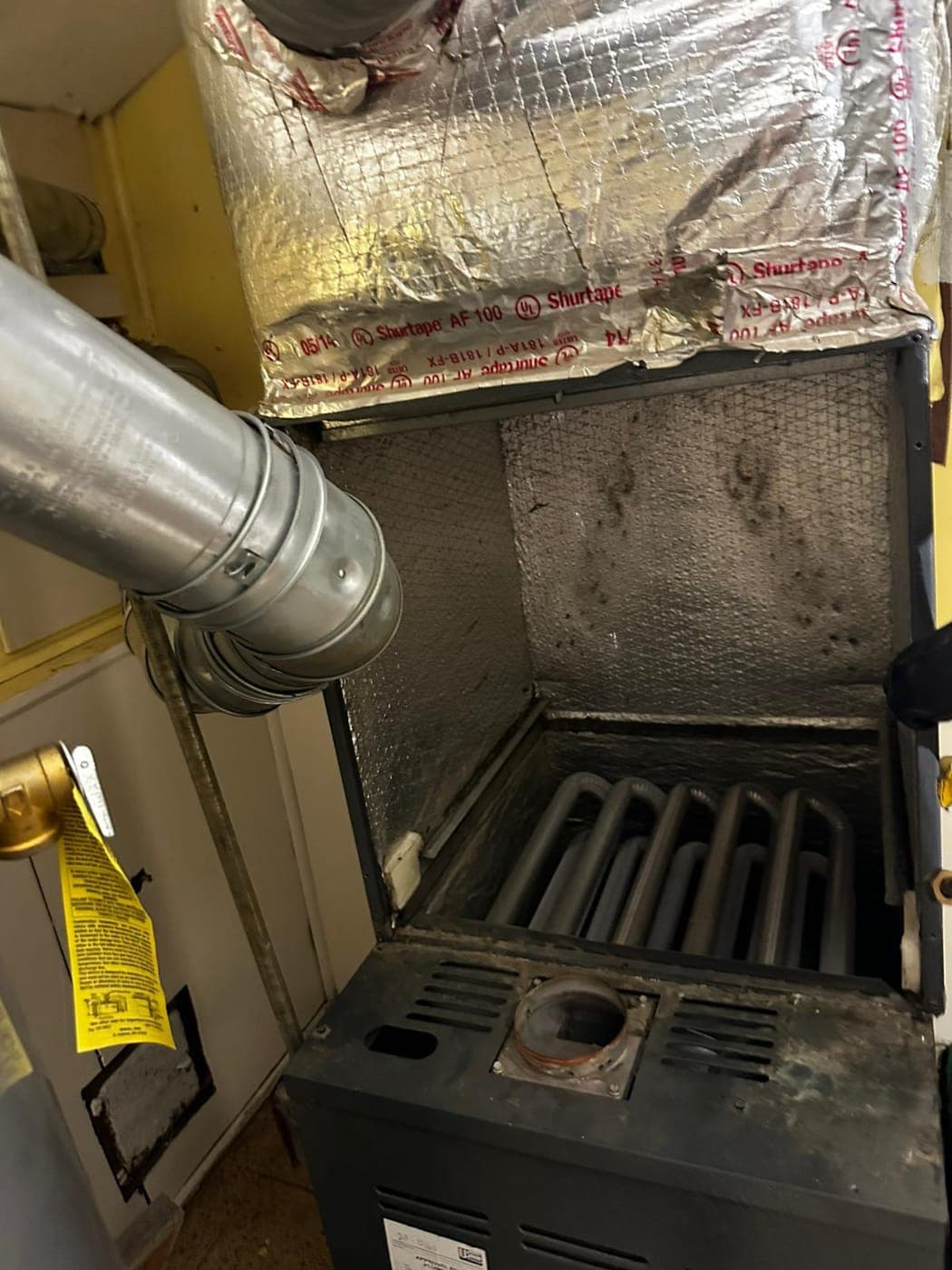
A furnace that quit on a cold morning is not always a repair call. Plenty of the no-heat calls we run end in something the homeowner could have fixed in two minutes. Here is what to check, in order, and where to stop and call.
If you smell gas, do not touch switches or the thermostat. Leave the house and call the gas utility from outside, then call us. If a carbon monoxide detector is sounding, get everyone out and call 911.
1. The thermostat
- Is it set to Heat, not Cool or Off? This happens more than you would think, especially in fall.
- Is the set temperature above the room temperature? Raise it several degrees and listen for the furnace to start within a minute or two.
- Battery-powered thermostats: replace the batteries. A blank screen or a thermostat that keeps resetting is a battery problem until proven otherwise.
- Smart thermostats can lose Wi-Fi and fall back to a schedule, or run low on power if the furnace wiring does not feed them enough. Check the display for a warning.
- Look for a hold or a setback schedule that is keeping the house cooler than you expect.
2. Power: the switch and the breaker
Every furnace has a switch that looks exactly like a light switch, mounted on or near the unit, often on a nearby stud or the side of the cabinet. It gets flipped off by accident, by kids, by a cleaner, by someone looking for the basement light. Make sure it is on.
Then go to the electrical panel. Find the breaker labeled furnace or heat and check that it is not tripped. A tripped breaker sits between on and off; push it fully off, then on. If it trips again right away, stop. Something in the furnace is drawing too much current, and resetting it repeatedly is how you burn out a control board.
Also check the furnace door. Most furnaces have a door safety switch that cuts power when the blower panel is off or not fully seated. Push the panel firmly into place.
3. The filter
A filter clogged with dust restricts airflow across the heat exchanger. The furnace overheats, a limit switch shuts the burners down, and the blower may keep running cold air, or the whole thing cycles on and off every few minutes. Pull the filter and look at it. If you cannot see light through it, replace it. Put the new one in with the arrow pointing toward the furnace.
After a new filter, the furnace may need a few minutes and possibly a power reset, switch off for thirty seconds and then on, to clear a limit lockout.
4. Condensate on high-efficiency furnaces
If your furnace has white PVC pipes coming out of it for the exhaust and intake, it is a condensing unit. It produces water as it runs, which drains through a small trap and a hose or tube to a floor drain or a condensate pump.
If the trap or line clogs with sludge, or the condensate pump fails, a float or pressure switch stops the furnace. Look for water pooled in or around the unit, a condensate pump that is full and not running, or a tube that is kinked or frozen where it leaves the house. Empty the pump reservoir if it is full and see if the furnace restarts. Frozen exterior condensate lines are a common cold-snap problem in North Jersey.
Check the intake and exhaust terminations outside, too. Snow drifted over them, ice, leaves or a nest will shut down a condensing furnace on a pressure switch fault. Clear them.
5. Ignitor and flame sensor symptoms
Modern gas furnaces use a hot surface ignitor, a small ceramic element that glows orange to light the gas, and a flame sensor, a thin metal rod that confirms the burners are lit. Both fail in recognizable ways.
- Ignitor: you hear the inducer fan start, then a click, and no whoosh of flame. You may see the ignitor try to glow and fail, or not glow at all. The furnace tries a few times and locks out.
- Flame sensor: the burners light, run for a few seconds, and shut off. Then they try again. After several attempts the furnace locks out. A dirty flame sensor is one of the most common causes of intermittent no-heat.
Many furnaces have a small LED behind a viewing window on the cabinet that blinks a code. Count the blinks and match them to the chart on the inside of the door. Tell us the code when you call; it saves diagnostic time.
Cleaning a flame sensor is something some handy homeowners do. Replacing an ignitor is fragile work and ignitors break easily. Either one is quick for us.
6. Gas supply
Check that the gas valve on the pipe feeding the furnace is open: the handle should be in line with the pipe. Check whether other gas appliances, the stove or the water heater, are working. If nothing has gas, the problem is upstream: the meter, the utility, or the account. If the furnace has a standing pilot, which older units do, see whether it is lit. Relight only if you are comfortable following the instructions on the unit's label.
If you smell gas at any point, stop here, leave, and call the gas company from outside.
When to stop and call
- The breaker trips again after one reset.
- You see scorching, melted wiring, soot, or rust flakes around the burners.
- The furnace runs but the house keeps getting colder.
- The blower runs constantly and never shuts off.
- The furnace short-cycles even after a new filter.
- There is a new loud noise: grinding, screeching, or a bang on startup.
- You have gone through this list and nothing changed.
A furnace that lights with a bang, has a flame that rolls out of the burner compartment, or leaves soot may have a cracked heat exchanger. That is a carbon monoxide risk. Shut it off and call.
Carbon monoxide safety
Every home with a gas furnace or boiler should have a working CO detector on every level, especially near bedrooms. Test them when you change the filter. If a detector sounds, or anyone feels headachy, dizzy or nauseated when the heat is running, get out first and call 911. Then call us. We check for CO and heat exchanger integrity on every no-heat call.
When to call Master's Plumbing
If the checks above do not bring the heat back, or you hit any of the stop signs, call Master's Plumbing at 862-666-2155. We run no-heat calls 24/7 across North Jersey, our vans carry ignitors, flame sensors, capacitors and common boards, and you get a firm by-the-job price before we start. If the furnace is old and this is not its first failure, we will give you an honest repair-versus-replace answer.
Related services
- FurnacesFurnace not lighting or blowing cold? Master's Plumbing repairs, installs and maintains gas furnaces across NoLearn more
- Heating RepairFurnace, boiler, steam or heat pump not keeping up? Master's Plumbing repairs every type of heating system acrLearn more
- Emergency HeatingNo heat in the middle of the night? Master's Plumbing repairs boilers, furnaces and heating systems 24/7 acrosLearn more
- Heating Tune-UpGet the furnace or boiler checked before the first cold night. Master's Plumbing performs fall heating tune-upLearn more