Cooling
AC Not Cooling? 5 Quick Checks Before You Call for Repair
AC running but the house is still hot? Five checks a homeowner can safely make before calling for repair: thermostat, filter, breakers, the outdoor unit and ice on the lines.
By Master’s Plumbing 5 min read
The air handler is running, the thermostat says Cool, and the house keeps getting warmer. Before you call, spend ten minutes on these checks. A good number of summer service calls end with a filter, a breaker, or a frozen coil that just needed to thaw.
If you see ice anywhere on the refrigerant lines or the indoor coil, turn the system off at the thermostat now, set the fan to On, and let it thaw before doing anything else. Running it frozen can kill the compressor.
1. Thermostat
- Mode set to Cool, not Heat, Off, or Fan Only.
- Set point a few degrees below the current room temperature.
- Fresh batteries. A dying thermostat battery is a common reason the outdoor unit never starts.
- Fan on Auto. With the fan set to On, the blower runs constantly and pushes room-temperature air between cooling cycles, which feels like the AC is not working.
- Smart thermostats: check for a hold, a schedule, or an eco setting keeping the house warmer than you want.
After lowering the set point, wait several minutes. Most systems have a built-in delay before the compressor restarts to protect it.
2. The filter
Pull the filter from the return grille or the slot on the air handler. If it is gray and you cannot see light through it, replace it. A choked filter starves the indoor coil of air. The coil gets too cold, ice forms, and cooling drops to almost nothing while the system runs continuously. A return grille blocked by furniture does the same thing.
Match the size printed on the frame, install it with the arrow pointing toward the air handler, and check it monthly during cooling season if you have pets or a dusty house.
3. Breakers and the disconnect
Check the electrical panel for two breakers: one for the air handler, often labeled furnace, AC or blower, and a larger double-pole breaker for the outdoor condenser. Reset a tripped breaker once. If it trips again, stop and call; a hard-tripping condenser breaker usually means a failed capacitor, a seized fan or compressor motor, or a short.
There is also a disconnect box on the wall next to the outdoor unit, a small gray box with a pull-out block or a lever. Make sure it is in. Landscapers and painters pull them.
Then look at the indoor unit. Is the blower running? If the blower runs but the outdoor unit is silent, the problem is outside or in the control wiring. If nothing runs at all, it is power, the thermostat, the air handler's control board, or the float switch covered below.
4. The outdoor unit
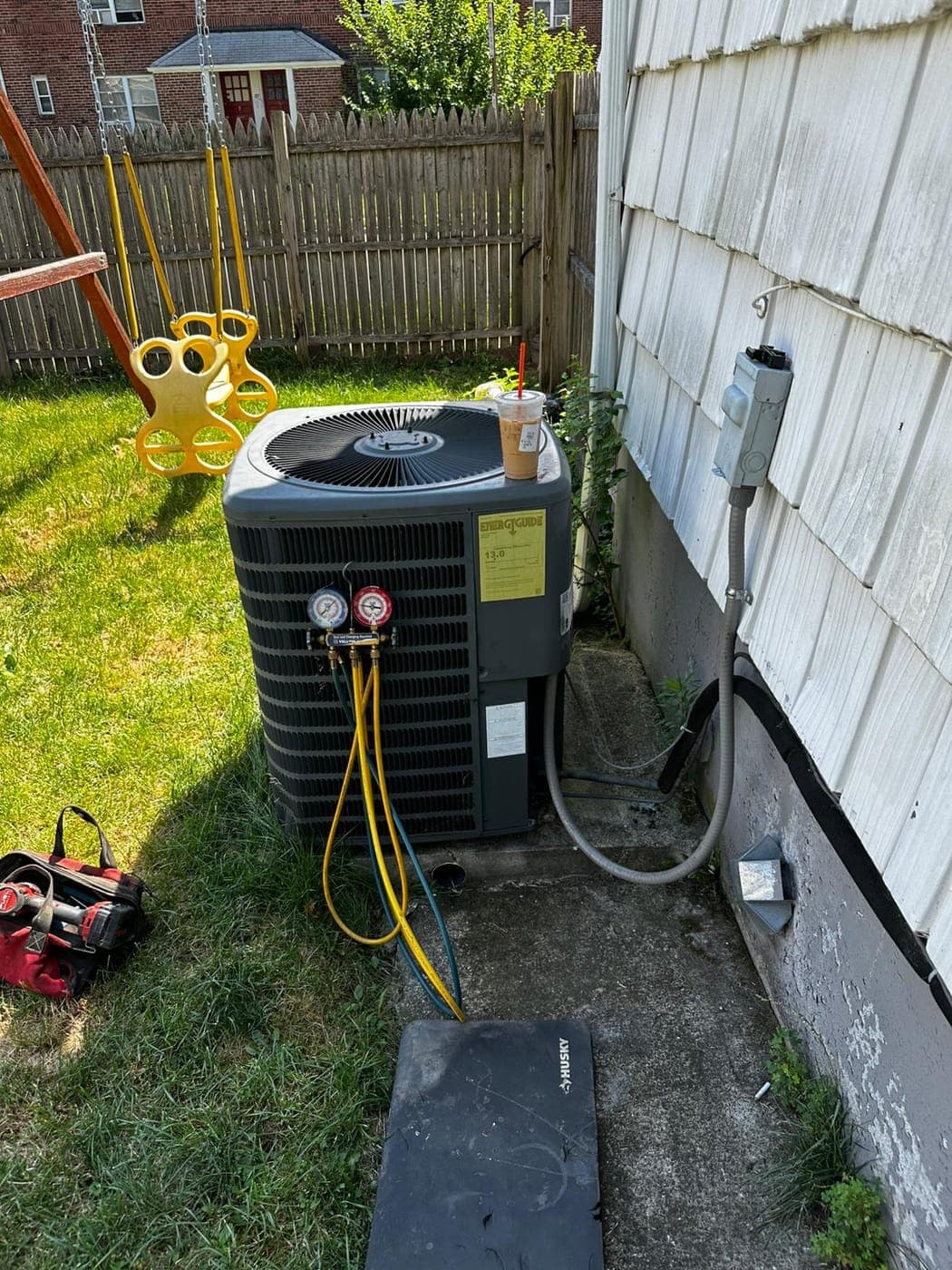
Go outside and look at the condenser, the metal box with the big fan on top.
- Is the fan turning? If the unit hums but the fan does not spin, that is often a capacitor. Do not stick anything in to help it. Turn it off and call.
- Is it packed with cottonwood fluff, grass clippings, leaves or dryer lint? Clogged fins cannot dump heat, and the system loses capacity or trips on high pressure. Shut the power off at the disconnect, then rinse the fins gently from the inside out with a hose. No pressure washer.
- Is it buried in shrubs? Cut back so there is open space on all sides and above it.
- Are the copper lines to the house insulated and intact? Sun-rotted insulation on the larger line hurts efficiency. Ice on that line is a stop sign.
5. Ice on the lines or coil
Frost on the larger copper line at the condenser, or ice visible on the indoor coil, means the system is not moving enough heat: usually low airflow from a dirty filter, a failed blower or closed vents, or low refrigerant from a leak. Either way, the fix starts with thawing.
- Set the thermostat to Off and the fan to On. Running the blower alone melts the ice faster.
- Wait until the ice is fully gone. This can take several hours. Put towels under the air handler; the melt can overflow the drain pan.
- Replace the filter if it was dirty and open all the supply registers.
- Turn the system back on. If it cools normally and stays clear, it was airflow. If ice returns within a day, it is likely refrigerant, and that needs a technician.
Refrigerant does not get used up. If it is low, it leaked. Topping it off without finding the leak is a bill you will pay again next summer.
Bonus check: the condensate float switch
The air handler produces water as it cools. It drains through a PVC line to a floor drain, a pump, or outside. If that line clogs with algae, a float switch in the drain pan lifts and shuts the system down to keep it from flooding the ceiling or floor. If the AC stopped and there is water sitting in the pan under the coil, or a full condensate pump, that is why.
Clearing the drain line, with a wet-vac on the exterior end or by flushing it, usually restarts the system. If you see water on a ceiling below an attic air handler, shut the system off right away.
What the tech will check
If the quick checks do not bring cooling back, here is what a service call covers.
- Refrigerant pressures and the temperature split across the coil, to confirm the system is moving heat properly.
- The capacitor and contactor, the two parts that fail most on hot days.
- Fan and compressor amperage, to catch a motor that is on its way out.
- Leak testing when refrigerant is low, and a repair before a recharge.
- Airflow: blower, coil cleanliness, ductwork, and the condensate drain.
- Electrical connections and the low-voltage wiring.
You get a firm price before any repair. If the compressor is gone on an older system, you get an honest replacement conversation instead of a patch.
When to call Master's Plumbing
If the AC still is not cooling after these checks, if it trips a breaker, if ice comes back, or if anyone in the home is at risk in the heat, call Master's Plumbing at 862-666-2155. We run emergency AC service 24/7 across North Jersey and prioritize households with infants, older adults or medical conditions during heat advisories.
Related services
- AC RepairCentral air not cooling? Master's Plumbing repairs capacitors, motors, refrigerant leaks and frozen coils on aLearn more
- Emergency ACAC died in a heat wave? Master's Plumbing provides 24/7 emergency air conditioning repair across North Jersey Learn more
- AC Tune-UpAC tune-ups in North Jersey: coil cleaning, refrigerant check, drain flush and electrical testing so your systLearn more
- AC InstallationNew central air for North Jersey homes: right sizing, SEER2 matched systems, permits, inspection and financingLearn more